The recently repatriated fossil of Pithecanthropus erectus (Homo erectus), better known as Java Man, discovered by Dutch anatomist Eugène Dubois more...
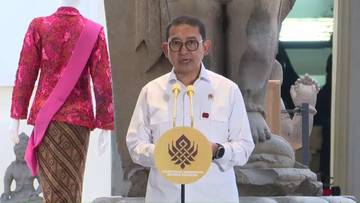
KBRN, Jakarta: Minister of Culture Fadli Zon announced that the Dubois Masterpiece fossil collection will be permanently housed at the National Museum of Indonesia. Portions of the collection will also be exhibited at other locations, including the Sangiran Museum in Sragen, Central Java.
Eugene Dubois, a Dutch anatomist, is renowned for discovering the first ancient human fossil outside Europe, Pithecanthropus erectus (now classified as Homo erectus), in Trinil, East Java, in 1891.
The discovery of the skullcap and femur marked a milestone in the study of human evolution, providing evidence that early humans once lived in the Indonesian archipelago.
“The Dubois Masterpiece collection will be permanently housed here. We may also consider creating a special Dubois collection in Sangiran,” Fadli said during the opening of the Eugene Dubois Fossil Collection Exhibition at the National Museum in Jakarta on Wednesday, December 17, 2025.
He explained that distributing the fossils across several locations would allow broader public access. “This way, information can be shared more evenly, and the educational value of the fossils can reach a wider audience,” he said.
Fadli emphasized that the repatriation process would be handled with utmost care to prevent damage. “We are dealing with six containers, because there are 28,131 fossils. We must be very careful in handling them,” he noted.
He added that the fossils cannot be stacked, as they require special protective packaging, which takes up significant space. His team will continue discussions with the repatriation team regarding technical aspects of packaging and transport.
A representative from the Netherlands will also oversee the repatriation process. “Repatriation efforts have been ongoing since 1975, but this is the largest in history,” Fadli said.
The Dutch government has approved the repatriation. Director General of Diplomacy, Promotion, and Cultural Cooperation Endah T.D. Retno Astuti confirmed that the approval was secured through Indonesia’s Repatriation Meeting Team.
“This decision identifies the fossils and how they were obtained. It also affirms that the fossils originated from Indonesia,” she said. (Misni Parjiati/Lasti Martina)






/3cihxx87s131bj2.jpeg)