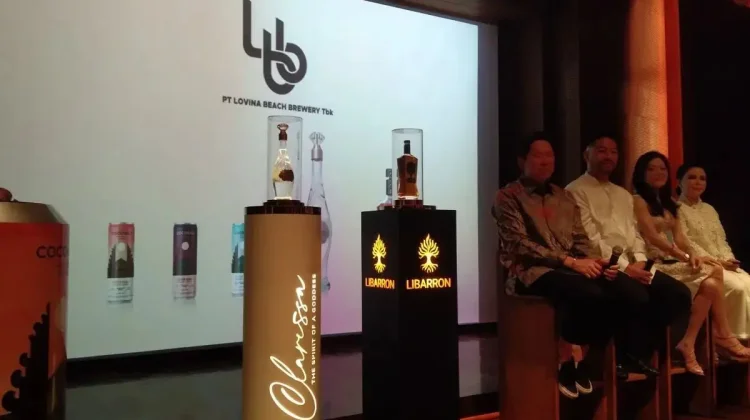
Lovina Beach Brewery, a beverage producer from Buleleng Regency, Bali, showcases three variants of Coco Bali alongside women-specific alcoholic bevera...
KBRN, Petitenget: Lovina Beach Brewery, a beverage producer hailing from Buleleng, Bali, is making bold strides into the international market by leveraging the unique flavors of the Island of the Gods. On Saturday, December 27, 2025, the company announced the expansion of its export reach for a diverse portfolio of alcoholic and non-alcoholic beverages, all crafted from locally grown Balinese ingredients.
“By carrying the DNA of Bali, we are developing international standards for a modern lifestyle,” said Bona Budhisurya, President Director of Lovina Beach Brewery, during an event in Petitenget, Badung, on December 27, as quoted by Antara.
The brewery’s flagship line, Coco Bali, features three distinct variants utilizing Bali’s native tropical fruits, including salak gula pasir (sugar snake fruit), kelapa kopyor (macapuno coconut), and agave. These products are offered in both a 4.9 percent alcohol-by-volume (ABV) version and a sugar-free, non-alcoholic option.
In a pioneering move for the national beverage industry, Lovina Beach Brewery has successfully cultivated Agave, the Mexican plant famous as the base for Tequila, on Balinese soil, where it thrives in the sandy and limestone-rich terrain of Nusa Penida.
This initiative includes a one-hectare plantation that has been officially recognized by the Indonesian World Records Museum (MURI) as the first of its kind in the country.
Looking ahead, the company plans to expand this cultivation to 11 hectares to further empower local farmers in the region. The efficiency of the crop is significant, as a single agave "pina", the pineapple-like heart of the plant, can yield approximately eight liters of raw material for fermentation and distillation at their production facility in Banyuning Village, Singaraja.
Beyond the Coco Bali range, Lovina Beach Brewery is diversifying into premium alcoholic beverages tailored specifically for women, as well as high-end whisky.
The brand's international prestige was recently bolstered by a collaboration with the Van Gogh Museum in the Netherlands. This partnership resulted in a limited-edition whisky, with only 1,900 bottles produced for the global market.
Targeting major economies including Japan, China, Singapore, and the United States, Budhisurya acknowledged the hurdles of entering the global stage with niche ingredients.
"Beverages made with agave are not yet common, so the challenge lies in introducing these new flavors. Currently, there are no other drinks produced using kelapa kopyor, agave, and salak gula pasir," he explained. ***