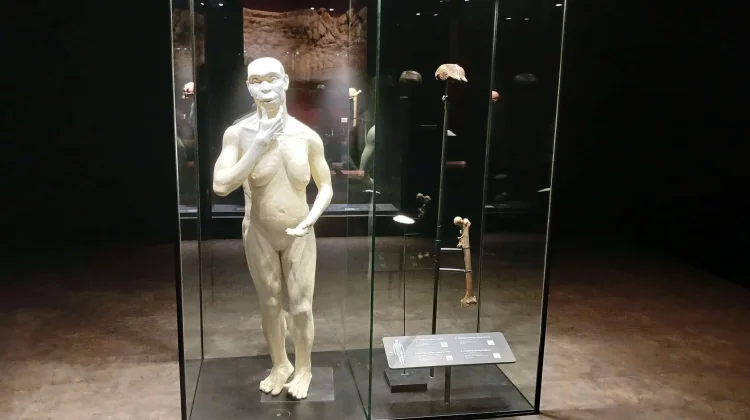
Four fossil items related to "Java Man" (right) and a replica of "Homo erectus" (left) at the National Museum of Indonesia in Jakarta on Wednesday (17...
KBRN, Jakarta: Four collections from one of the earth's earliest human sites have been returned to Indonesia from the Netherlands and displayed at the National Museum of Indonesia in Jakarta. This includes fossils of early human Homo erectus known as "Java Man".
A skull, a molar tooth, and a thigh bone of Java Man, as well as an engraved shell were discovered by Dutch scientist Eugène Dubois in the 1890s. All four items were discovered in Trinil, Ngawi Regency, East Java, and are estimated to be hundreds of thousands to millions of years old.
They were later exhibited in Leiden, Netherlands, for more than 100 years. First stored at Rijksmuseum van Geologie en Mineralogie (Royal Museum of Geology and Minerals), it has been exhibited at the Naturalis Biodiversity Center after a museum merger in 1984.
The fossils are now displayed at the National Museum of Indonesia as part of a permanent exhibition titled Sejarah Awal (Early History). The exhibit, inaugurated at a ceremony on Wednesday (17/12/2025), highlights the Indonesian archipelago in prehistoric times.
Detail of a molar tooth belongs to "Java Man" at the National Museum of Indonesia in Jakarta on Wednesday (17/12/2025). (Photo: RRI VOI/Rama Shidqi Pratama)
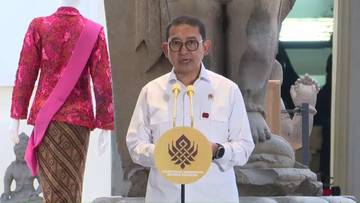
"Today, we mark a historic moment: the homecoming of the Java Man to Nusantara (Indonesian archipelago). A return of the masterpieces of 28,131 fossils from the Dubois collection, to their cultural roots, to the land where this story began," Indonesian Minister of Culture, Fadli Zon, said in his remarks at the ceremony.
Fadli said 50-60% of the world's Homo erectus fossils were found in Indonesia, thus the country has contributed "one of the richest" records of early human life ever discovered. However, he highlights that a significant part of the nation's past is held beyond the reach of Indonesian society, and it now ends with their repatriation.
"This (repatriation) signals a forward-looking post-colonial approach, where research continues here at its origin, and where Indonesian communities are recognized as primary stakeholders in the heritage of our own past," he said.
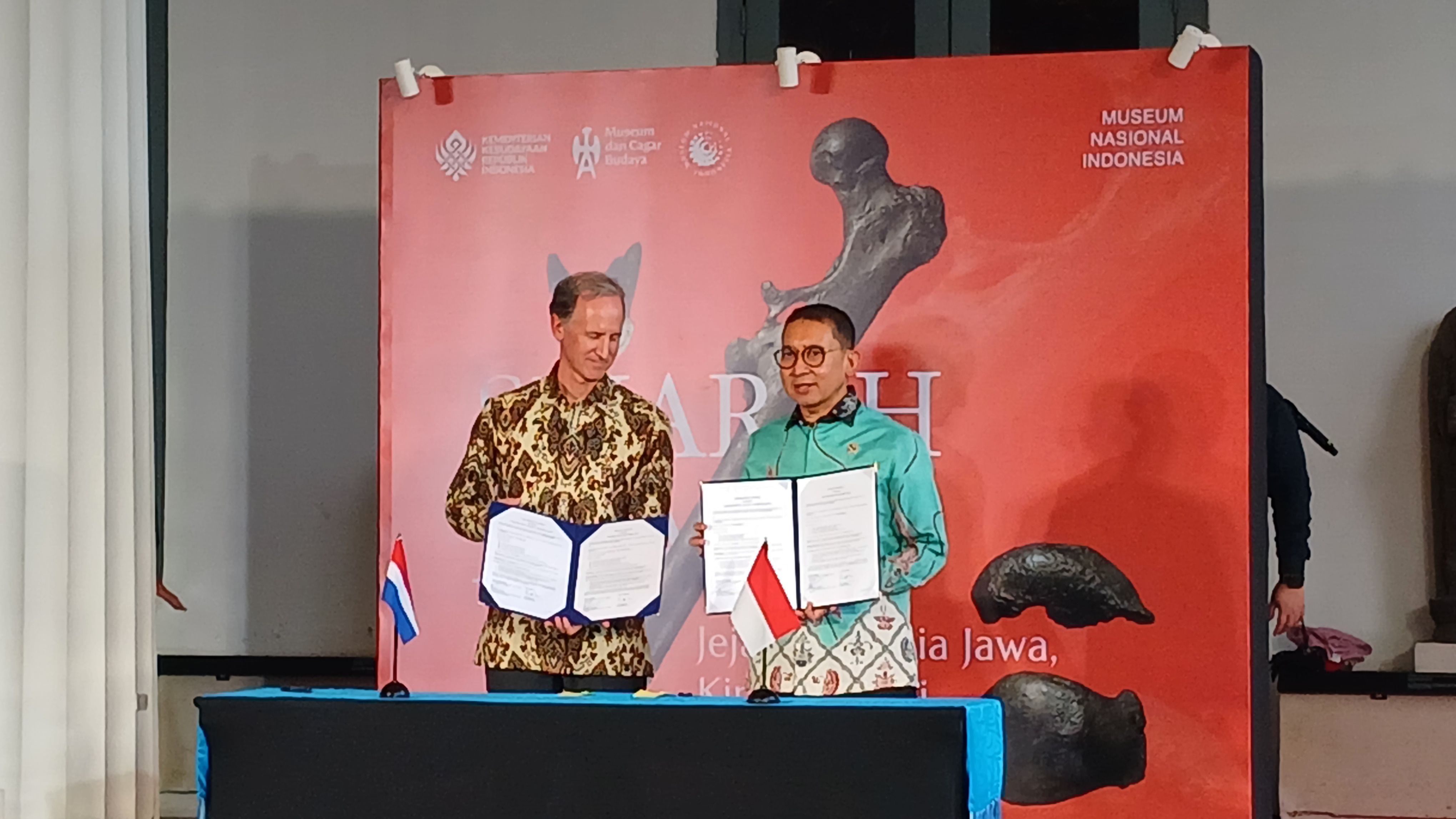
Indonesian Minister of Culture, Fadli Zon (left) and the Ambassador of the Netherlands to Indonesia, Marc Gerritsen (right) after signing a repatriation agreement at the National Museum of Indonesia in Jakarta on Wednesday (17/12/2025). (Photo: RRI VOI/Rama Shidqi Pratama)
Fadli Zon said the repatriation is part of restoring Indonesia’s collective memory, its place in the narrative of human evolution, and historical reconciliation, as well as cultural sovereignty. He expressed appreciation for the partnership with the Dutch government in repatriating Java Man, calling it a model for global heritage governance.
"What we witness today speaks to a broader global commitment to place ethics alongside history, and partnership alongside knowledge," he said.
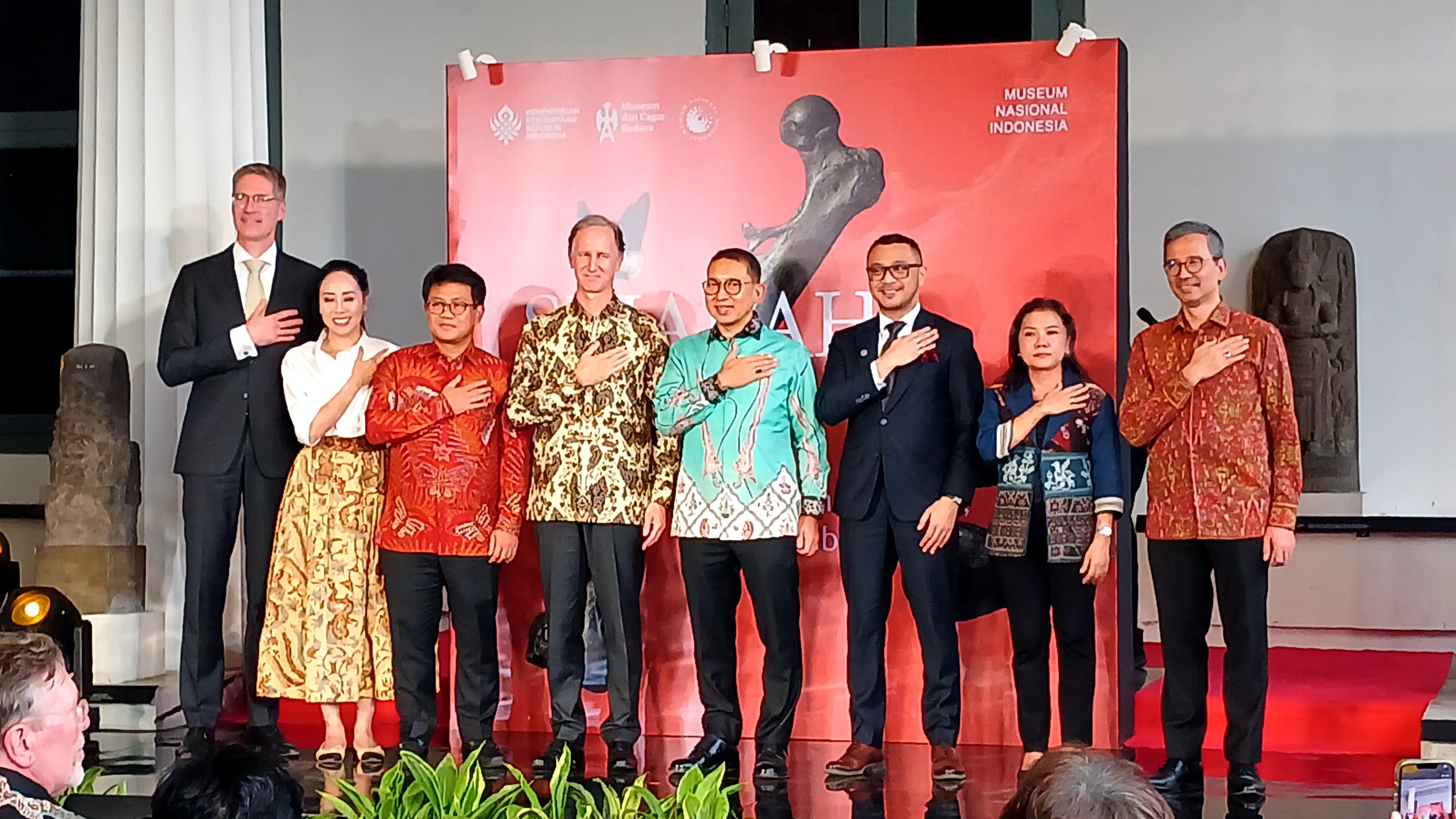
Indonesian and Dutch officials, including the Indonesian Minister of Culture, Fadli Zon (center right), Vice Minister of Culture Giring Ganesha (third right), Ambassador of the Netherlands to Indonesia, Marc Gerritsen (center left), and Director General of the Naturalis Biodiversity Center, Marcel Beukeboom took pictures during the opening ceremony of Sejarah Awal permanent exhibition at the National Museum of Indonesia in Jakarta on Wednesday (17/12/2025). (Photo: RRI VOI/Rama Shidqi Pratama)
Director General of the Naturalis Biodiversity Center, Marcel Beukeboom, described the handover as the beginning of a new phase. He said they plan to repatriate thousands of other artifacts found in Indonesia.
"My visit to Indonesia and the act of handing over the case containing the four most valuable items in the Dubois collection marks the beginning of a new phase. We intend to repatriate all thousands and thousands of items in the collection excavated in Indonesia 130 years ago," he said.
Beukenboom said that they were admired by millions of visitors and examined by Dutch and Indonesian scientists when they were still in Leiden. According to him, the fossils give them a new understanding of human origins and history, thus it has immense historical and scientific importance to Indonesia, the Netherlands, and humankind.
"These fossils bear witness to an important link in human evolution, but they also represent a chapter in the history of Indonesia and form part of its cultural heritage," he said.
Located west of the iconic National Museum (Monumen Nasional or Monas), the National Museum of Indonesia has stored 195,044 historical items, making it one of the largest in the country. It tells the whole history of Indonesia, including statues of deities dating back to the Hindu-Buddha kingdoms before the 14th century.
The items were first collected by Bataviaasch Genootschap van Kunsten en Wetenschappen (Royal Batavian Society of Arts and Sciences), an institution founded in 1778; the current museum building was completed in 1868. The museum is now managed by Indonesia Heritage Agency, an agency under the Indonesian Ministry of Culture.