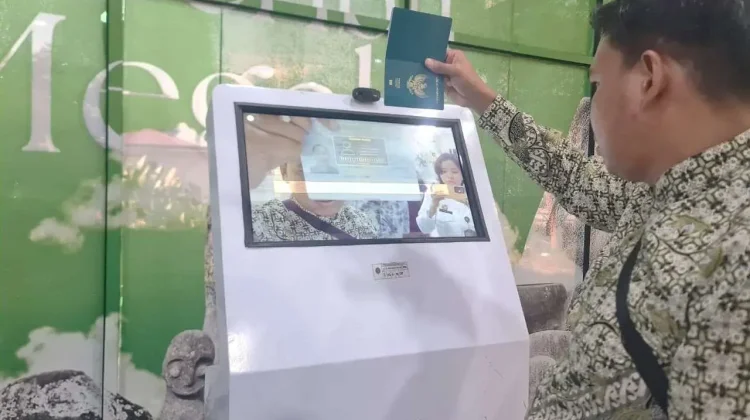
File Photo - Officials from the Palu Class I Immigration Agency and airport authorities conduct system trials for the All Indonesia digital device at...
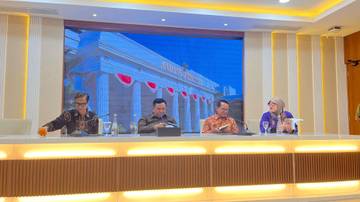
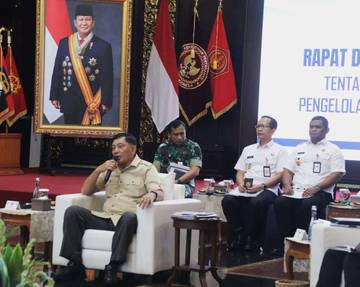
KBRN, Jakarta: Indonesian Minister of Immigration and Correctional Affairs Agus Andrianto officially unveiled a roadmap consisting of 15 priority action programs for 2026 during a year-end reflection event on Monday, December 29, 2025.
These initiatives serve as an expansion of the 13 acceleration programs from 2025, specifically designed to synchronize the ministry's operations with the "Astacita" vision of President Prabowo Subianto and Vice President Gibran Rakabuming Raka. By integrating digital immigration services with prison-based food self-sufficiency programs, the ministry aims to modernize border security and correctional rehabilitation across all directorates.
During a year-end reflection in Jakarta on Monday, December 29, 2025, the Minister directed officials to align their efforts with these new objectives. “To those who have signed the 2026 performance agreements, I ask that your work orientation begin to be directed toward what has been stated in the 15 action programs within the Ministry,” he said, as quoted by Antara.
The action programs are distributed across the Directorate General of Immigration, the Directorate General of Corrections, the Secretariat General, and the Human Resources Development Agency. Key immigration initiatives include strengthening digital-based services, enhancing inspections at checkpoints, and simplifying visa regulations for business, Golden Visas, and investor stay permits to boost investment.
The Ministry will also deploy village-level immigration officers (pimpasa) for legal counseling to prevent human trafficking and smuggling. Additionally, they plan to fulfill infrastructure needs for traditional border posts and install more autogates at airports, seaports, and international border crossing posts (PLBN).
Regarding the correctional system, the focus will be on eradicating drug trafficking and fraud syndicates operating within prisons (lapas) and detention centers (rutan). The Ministry also aims to address overcapacity and overcrowding while promoting food self-sufficiency through farming and livestock programs on idle prison lands.
To support the national free nutritious meal program, the Ministry will build healthy kitchens in prisons utilizing certified inmates. “Healthy kitchens will be developed in prisons and detention centers by empowering certified inmates to support the free nutritious meal program,” the Minister noted regarding the inmate labor initiatives.
Other programs include marketing inmate-made products through cooperatives, providing high school equivalency education for prisoners, and adopting renewable energy like solar cells in border regions. The ministry will also provide free health check-ups and social services for communities living near immigration and correctional facilities.
Finally, the plan includes facilitating housing for ministry civil servants and increasing staff competence through massive open online courses and vocational education. “I ask all of us to have good intentions, unify our goals, and unify our direction to contribute together toward the success of the 2026 action programs,” Minister Agus urged.
He expressed his appreciation for the staff's performance in 2025 while offering an apology to the public for any shortcomings during the new ministry's first year. “We have delivered performance evaluations to both the Immigration and Corrections ranks; in principle, they must evaluate the weaknesses that occurred during this first year of the ministry carrying out its duties,” he concluded. ***