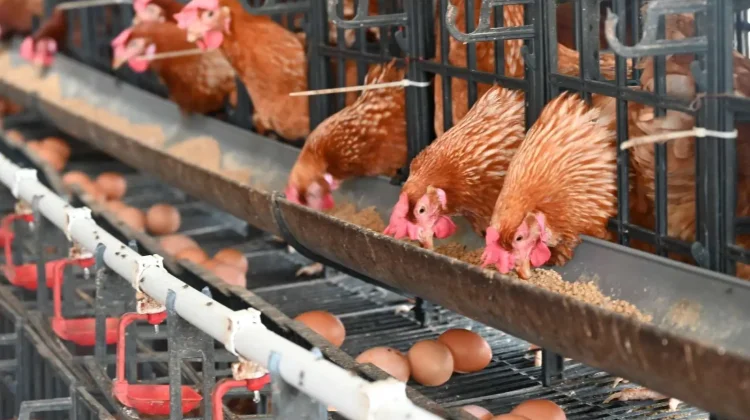
File Photo - A poultry farm in Paser Regency, East Kalimantan. A lecturer from Jember State Polytechnic has created an IoT- and AI-powered egg incubat...
KBRN, Jakarta: Innovations in livestock technology in Indonesia continue to develop in line with the increasing need for efficiency in the egg hatching process. Now, traditional methods are being replaced by intelligent systems based on the Internet of Things (IoT) and Artificial Intelligence (AI).
Denny Trias Utomo, a lecturer in Information Technology at the Jember State Polytechnic, explained that the manual egg checking process carries a high risk to the success of hatching. Eggs that are removed from the machine too often can experience stress and reduce productivity by up to 30 percent.
“Removing eggs one by one risks stressing the eggs and ultimately killing them. This is certainly detrimental to farmers,” said Denny, in Jember, on Saturday, December 27, 2025.
As a solution, Denny and his team developed an IoT-based automatic hatching machine integrated with artificial intelligence. This technology is capable of precisely regulating temperature and humidity while monitoring embryo growth online and in real time.
He explained that the AI-based system can detect the condition of eggs from the fertilization process to the final stage of hatching. Monitoring is done automatically without removing the eggs from the incubator, making it safer and more stable.
“With this technology, egg conditions can be monitored at any time without direct contact. The risk of hatching failure can also be reduced,” explained Denny.
His team's machine is now capable of significantly improving the efficiency and accuracy of the hatching process.
One IoT-AI-based machine can hold up to 500 eggs. At partner farms, this system is applied to 10 machines at once, allowing a total of 5,000 eggs to be monitored automatically.
"If done manually, checking would take a long time and require a lot of energy. Through this system, monitoring becomes faster and more efficient," added Denny.
He expressed hopes that this intelligent hatching machine can be a solution for medium and large-scale farmers to increase hatching productivity while reducing the potential for failure. (Gusti Panji/Sri Wahyuni)





/s9q9befqn5s4ikx.png)