File Photo - The Integrated Tropical Biodiversity Greenhouse under construction at the Cibinong Science Center (CSC) complex in Bogor Regency, West Ja...
KBRN, Jakarta: To accelerate the downstreaming of research and strengthen collaboration across sectors, the Indonesian National Research and Innovation Agency (BRIN) is preparing to establish Rumah Inovasi Indonesia (Indonesia Innovation Center) as a central hub for managing national innovation.
The initiative is designed to connect researchers, industry, investors, and the public in a single ecosystem. BRIN Head Arif Satria said the new platform will serve not only as a showcase for research outcomes but also as a meeting point between innovators and potential partners.
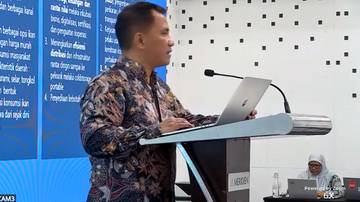
“Rumah Inovasi Indonesia is a place for matchmaking between innovators, industry, investors, and users. Innovation should not stop in the laboratory,” Arif told a discussion forum held recently at the B.J. Habibie Building in Jakarta, as quoted on BRIN's official website.
Arif said the hub will integrate key components of innovation management, including a national innovation database, intellectual property management, research-based startups, funding schemes, and venture capital.
“Inside, there will be an innovation dashboard, IP management, research databases, startups, and venture capital. We are preparing this so the downstreaming process becomes more systematic,” he explained.
The initiative will also be supported by a digital application platform, enabling the public to access BRIN’s innovation data openly. Through the app, users can view technology readiness levels, contact researchers, and explore collaboration opportunities.
“People can immediately see what innovations exist, their technology readiness level, who the researchers are, and how to collaborate,” Arif said.
He acknowledged that one of Indonesia’s long-standing challenges has been weak communication and dissemination of research results. "It’s not because innovation doesn’t exist, but because it hasn’t been communicated well. This is what we want to fix,” he noted.
By creating Rumah Inovasi Indonesia, BRIN hopes adoption will be faster, with users able to provide direct feedback to researchers. This two-way interaction is considered vital to refining products so they better meet real-world needs.
“Feedback from users is important. From there, innovation can be improved to be more user-friendly,” Arif emphasized.
The hub will not be limited to BRIN alone but will be open to the wider national research ecosystem, including universities and other research partners. “This is not just BRIN’s innovation house, but Indonesia’s innovation house,” he said.
Arif added that the initiative is part of reforming national innovation governance, ensuring transparency and accountability. “If the public asks what BRIN is doing, the answer can be seen directly, just three clicks,” he remarked.
Looking ahead, BRIN envisions Rumah Inovasi Indonesia as both a national innovation showcase and a key connector between research, policy, and industry needs, ensuring that research delivers tangible value for national development. ***