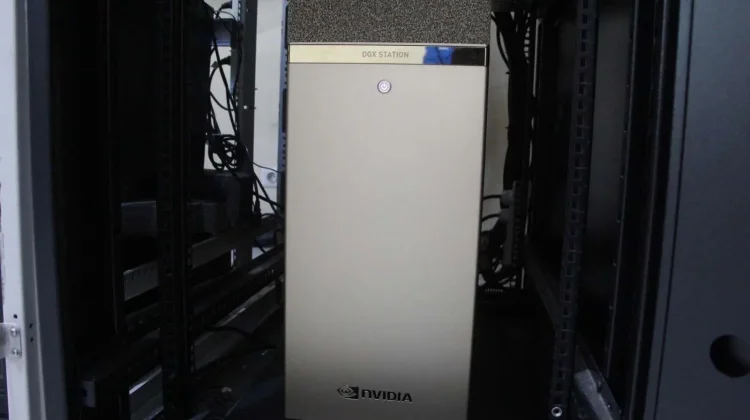
The NVIDIA DGX A100 Station supercomputer at the University of Jember (UNEJ), East Java. Since 2022, the device has supported research, artificial int...
KBRN, Jember: The University of Jember (UNEJ) in East Java is among eight Indonesian universities that own and operate a supercomputer.
The high-performance computing infrastructure, an NVIDIA DGX A100, has been in operation since 2022 and is now supporting research, artificial intelligence (AI) development, the Internet of Things (IoT), and data-driven public services.
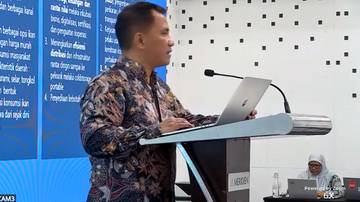
Prof. Bayu Taruna Widjaja Putra, Head of the Academic Implementation Unit for Information and Communication Technology (UPA TIK) at UNEJ, said on Tuesday, December 30, 2025, that the supercomputer serves as a strategic tool to strengthen the implementation of the Three Pillars of Higher Education, particularly in research and community service.
Bayu highlighted the machine’s ability to process large-scale data quickly and in parallel. “Using conventional devices, processing one million images can take up to seven days. With a supercomputer, the same task can be completed in just two hours,” he explained.
UNEJ is applying the supercomputer to AI and IoT development, including its Smart Farming program at the UNEJ AI Center for Industrial Agriculture. The technology enables monitoring of crop conditions, real-time sensor data processing, and automatic yield predictions.
Beyond academic activities, the supercomputer is also used to develop geospatial data.
As coordinator of the Geospatial Information Infrastructure Development Center (PPIIG) for the Tapal Kuda region, UNEJ integrates spatial data with AI to analyze land-cover changes, environmental conditions, and support regional development planning. “With a geospatial approach, development data is not only presented in tables but can also be visualized directly on digital maps with precise coordinates,” Bayu said.
The Tapal Kuda region refers to the eastern salient of East Java, often described as a “horseshoe-shaped” area that includes seven regencies and two cities. It is known for its cultural diversity, strategic location, and rich natural resources.
Through collaboration with local administrations, UNEJ expects the supercomputer’s output to support a single data policy and evidence-based decision-making.
Bayu emphasized that supercomputers are not merely symbols of technological sophistication but tools for transforming data into information that benefits society. “Supercomputers are just tools. What matters most is how data is prepared and what output is produced for the common good,” he stated.
The presence of the supercomputer is expected to enhance research quality at UNEJ while delivering practical solutions that directly benefit the wider community. (Gusti Panji/Lasti Martina)